Page 30 - Utah Science Textbook
P. 30
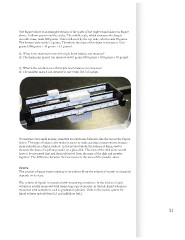
The Figure below is an enlarged version of the scales of the triple beam balance in Figure
above. It allows you to read the scales. The middle scale, which measures the largest
movable mass, reads 300 grams. This is followed by the top scale, which reads 30 grams.
The bottom scale reads 5.1 grams. Therefore, the mass of the object in the pan is 335.1
grams (300 grams + 30 grams + 5.1 grams).
Q: What is the maximum mass this triple beam balance can measure?
A: The maximum mass it can measure is 610 grams (500 grams + 100 grams + 10 grams).
Q: What is the smallest mass this triple beam balance can measure?
A: The smallest mass it can measure is one-tenth (0.1) of a gram.
To measure very small masses, scientists use electronic balances, like the one in the Figure
below. This type of balance also makes it easier to make accurate measurements because
mass is shown as a digital readout. In the picture below, the balance is being used to
measure the mass of a yellow powder on a glass dish. The mass of the dish alone would
have to be measured first and then subtracted from the mass of the dish and powder
together. The difference between the two masses is the mass of the powder alone.
Volume
The amount of space matter takes up is its volume. How the volume of matter is measured
depends on its state.
The volume of liquids is measured with measuring containers. In the kitchen, liquid
volume is usually measured with measuring cups or spoons. In the lab, liquid volume is
measured with containers such as graduated cylinders. Units in the metric system for
liquid volume include liters (L) and milliliters (mL).
31
above. It allows you to read the scales. The middle scale, which measures the largest
movable mass, reads 300 grams. This is followed by the top scale, which reads 30 grams.
The bottom scale reads 5.1 grams. Therefore, the mass of the object in the pan is 335.1
grams (300 grams + 30 grams + 5.1 grams).
Q: What is the maximum mass this triple beam balance can measure?
A: The maximum mass it can measure is 610 grams (500 grams + 100 grams + 10 grams).
Q: What is the smallest mass this triple beam balance can measure?
A: The smallest mass it can measure is one-tenth (0.1) of a gram.
To measure very small masses, scientists use electronic balances, like the one in the Figure
below. This type of balance also makes it easier to make accurate measurements because
mass is shown as a digital readout. In the picture below, the balance is being used to
measure the mass of a yellow powder on a glass dish. The mass of the dish alone would
have to be measured first and then subtracted from the mass of the dish and powder
together. The difference between the two masses is the mass of the powder alone.
Volume
The amount of space matter takes up is its volume. How the volume of matter is measured
depends on its state.
The volume of liquids is measured with measuring containers. In the kitchen, liquid
volume is usually measured with measuring cups or spoons. In the lab, liquid volume is
measured with containers such as graduated cylinders. Units in the metric system for
liquid volume include liters (L) and milliliters (mL).
31